
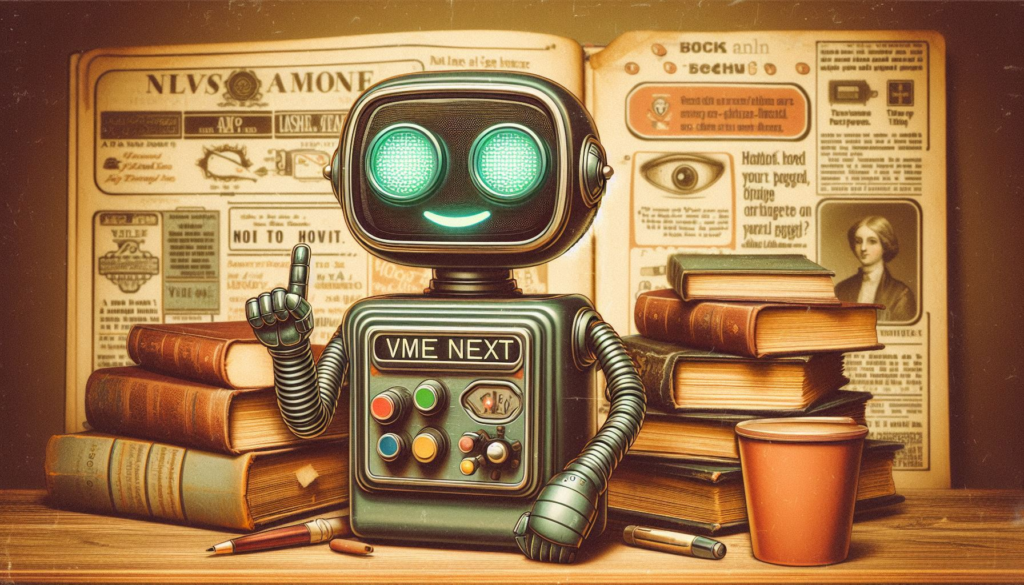
After completing a few AI agentic trainings, I decided it was time to level up my blog’s chatbot. But I didn’t want just a regular chatbot -I wanted something useful, intelligent, and integrated with my content. That’s how vMeNext was born.
Making the Chatbot Actually Useful
First things first: what’s the point of having a chatbot on a blog if it doesn’t know anything about the blog posts? Feeding the AI manually with every post would be a nightmare, so I decided to automate it.
I built a module that scrapes all blog posts automatically and trains the AI to create a summary file. This file is then used in the chatbot’s context, so it can actually answer questions about my posts. Even better, this happens on-demand: you just type a simple command in the chat, and vMeNext updates its knowledge.
Monitoring My Website Without Paying a Fortune
Next challenge: I wanted to monitor my website’s availability without spending money on services like SolarWinds. A few ideas later, I added another module that checks my blog’s availability and response time every minute and logs everything.
Since the chatbot runs on Hugging Face, it’s completely separate from my blog host, which makes the monitoring much more reliable.
And it doesn’t stop there – if the website goes down, vMeNext sends me an alert email automatically. On top of that, if I type “show stats” in the chat, it displays last hour statistics in a table and last 30 days as a graph.
Integrating Personal Documents
Like my previous AI project, vMeNext reads an about_me folder that contains documents about my professional career and skills. This allows the chatbot to answer questions about me directly, making it more personalized and interactive.
I also added a contact feature: if someone provides their email and wants to stay in touch, the chatbot can automatically send a notification. It’s like giving the AI a little “social awareness,” which makes it feel surprisingly human at times.
Why This Project Is Special
I believe this might be my last AI project that isn’t related to cybersecurity. That said, I already have a few ideas for using this tool in infosec, which I hope to share with the community soon.
Now that I understand how it all works, defending applications that use AI will be much easier too. I’m even considering writing a separate article about that.
Looking Ahead
vMeNext isn’t just a chatbot – it’s a small digital assistant that can:
- Summarize and understand blog content
- Monitor website health and generate statistics
- Process personal documents and answer questions about me
- Send emails and notifications automatically
It’s been an exciting journey to combine AI with practical tools, and I’m looking forward to exploring more ways to make AI truly helpful.
Final thought: Building vMeNext reminded me that AI isn’t just about flashy demos or writing code that “sounds smart.” It’s about creating tools that actually make life easier – and sometimes, even a little more fun.
If you’re curious, you can check out the project here: vMeNext on GitHub.